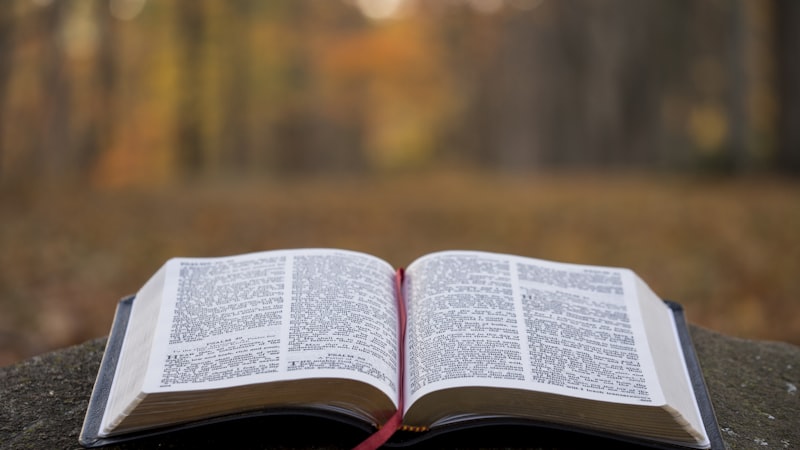
Missions Prayer Cards for Kids
The card was the size of a playing card, roughly three inches by five, and it was bent at one corner from being carried in the back pocket of a pair of cargo shorts for three weeks. On the front was a photograph of a Berber woman in Morocco wearing a striped wool blanket over her shoulders, kneading bread dough on a low wooden table. Flour dusted the table’s surface like a light snowfall. On the back were five lines of text: the name of the people group (Berber, Imazighen), the country (Morocco), the population (about 14 million), the primary religion (Islam), and three prayer points written in language a child could read. At the bottom, in small italic letters: Pray that God would open doors for the gospel among the Berber people.
Eight-year-old Daniel Cho had picked this card from a basket at his church’s missions fair three Sundays ago. He picked it because the bread in the photograph reminded him of the hotteok his grandmother made. Korean sweet pancakes, golden and crispy, filled with brown sugar and crushed peanuts. Something about one woman’s hands in dough making him think of another woman’s hands in dough made the Berber people feel close. Real. Not a statistic in a textbook, but someone’s grandmother making bread.
He prayed for the Berber people every night before bed. He kept the card on his nightstand, leaning against his water glass. It was the first thing he saw when he woke up.
That is what a prayer card does. It turns a number into a name and a name into a face and a face into a prayer.
If your family is exploring ways to teach kids about unreached people groups, prayer cards are one of the simplest and most effective tools you will find. They are portable, tangible, visual, and reusable. A child who cannot sit through a twenty-minute lecture on global missions can hold a single card and pray for one people group with focus and sincerity.
What Is a Missions Prayer Card?
A missions prayer card is a small, printed card, usually the size of a postcard or an index card, that features information about a specific unreached people group, missionary family, or country. The front typically includes a photograph or illustration. The back includes key facts and prayer points.
A well-designed prayer card for kids includes:
- The name of the people group (with pronunciation help if the name is unfamiliar)
- Where they live (country and region)
- How many people are in the group (population)
- Their primary religion (Islam, Hinduism, Buddhism, animism, or other)
- Their primary language (and whether the Bible has been translated into it)
- 2-4 specific prayer points written in child-friendly language
- A photograph or illustration that shows real life, not stereotypes, not poverty alone, but dignity and dailiness
The best prayer cards treat the people on them with respect. They show people cooking, working, laughing, celebrating, farming, building, not just suffering. The Berber woman on Daniel’s card was making bread. That is a portrait of ordinary life, not a fundraising image. The distinction matters.
How to Use Prayer Cards with Kids
Prayer cards work almost anywhere. That is their genius. They are not a curriculum or a program. They are a prompt. Here are the places families use them most:
At the Dinner Table
Keep a small stack of prayer cards in the center of the table or in a basket nearby. Before the meal prayer, pull one card. Read the name of the people group out loud. Read one prayer point. Pray for them. The whole thing takes sixty seconds. Over the course of a month, your family will have prayed for thirty different people groups, a practice that slowly but permanently expands how your children understand the world.
The smell of your family’s dinner, pot roast, chicken stir-fry, pasta with red sauce, black beans and rice, mingles with the name of a people group on the other side of the earth. That blending of the ordinary and the global is exactly what missions prayer should feel like.
In the Car
Long drives, school drop-offs, carpool lines. The card sits on the dashboard or rides in the cup holder. A parent reads it out loud at a stoplight. A child holds it in the back seat and traces the photograph with a finger. “Mom, what does ‘animism’ mean?” And suddenly the drive to soccer practice becomes a conversation about how different people understand the spiritual world, and how God loves all of them.
At Bedtime
This is where prayer cards do their deepest work. A child holds a card in the quiet of their room, the lamp on, the house settling into nighttime sounds, the dishwasher humming, a sibling brushing teeth down the hall. The child looks at the face on the card. They say the name. They pray. Then they put the card on the nightstand and go to sleep.
Something happens in that quiet moment. The people group stops being an assignment and becomes a companion. The child carries them into sleep. The name becomes familiar, like a friend they’ve never met but care about anyway.
In Sunday School and Children’s Ministry
Prayer cards work beautifully in group settings. Pass one card to each child at the beginning of class. Give them two minutes to read it silently. Then go around the circle and let each child pray one sentence for the people group on their card. In a class of twelve kids, twelve unreached people groups are prayed for in under five minutes. The cumulative effect, week after week, month after month, is a generation of children who grow up with God’s heart for the nations embedded in their spiritual formation.
Some children’s ministries create prayer card walls, a bulletin board or a section of wall where used prayer cards are pinned up after being prayed over. Over a school year, the wall fills up. It becomes a visual testimony of faithfulness. Kids point to cards and say, “I prayed for them.”
What Makes a Good Prayer Card for Kids
Not all prayer cards are created equal. Cards designed for adult missionaries or seminary students use vocabulary and concepts that fly over a child’s head. Here is what to look for, or aim for, if you are making your own:
Simple language. A prayer point that reads “Pray for the indigenous church planting movement among semi-nomadic pastoralists” means nothing to a nine-year-old. A prayer point that reads “Pray that the Fulani people would hear about Jesus in their own language as they travel with their cattle” means everything.
One people group per card. Don’t cram three groups onto one card. One face. One name. One set of facts. Focus creates connection.
Dignified images. Show people living their lives. A grandmother weaving cloth on a wooden loom. Children playing with a ball made of wrapped banana leaves. A father carrying his daughter on his shoulders through a market crowded with baskets of mangoes and stacks of dried fish. These images communicate dignity. They say: these are real people with real lives, not projects to be fixed.
Here are four examples of prayer card illustrations, each one showing a scene from daily life among an unreached people group. Right-click and save to print these for your family or classroom.
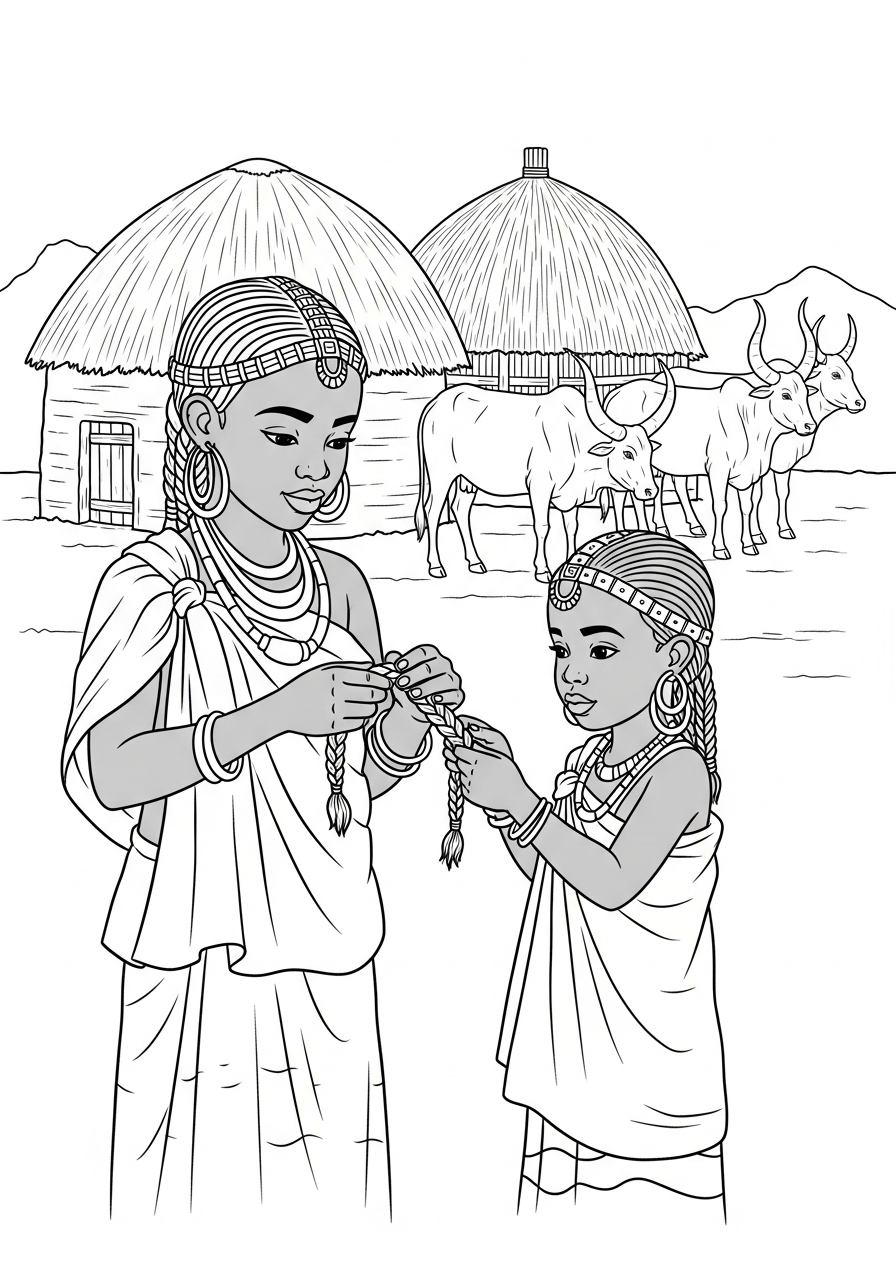 The Fulani people of Nigeria. Over 40 million people across West Africa. Pray for the Fulani to hear God’s Word in Fulfulde, their heart language.
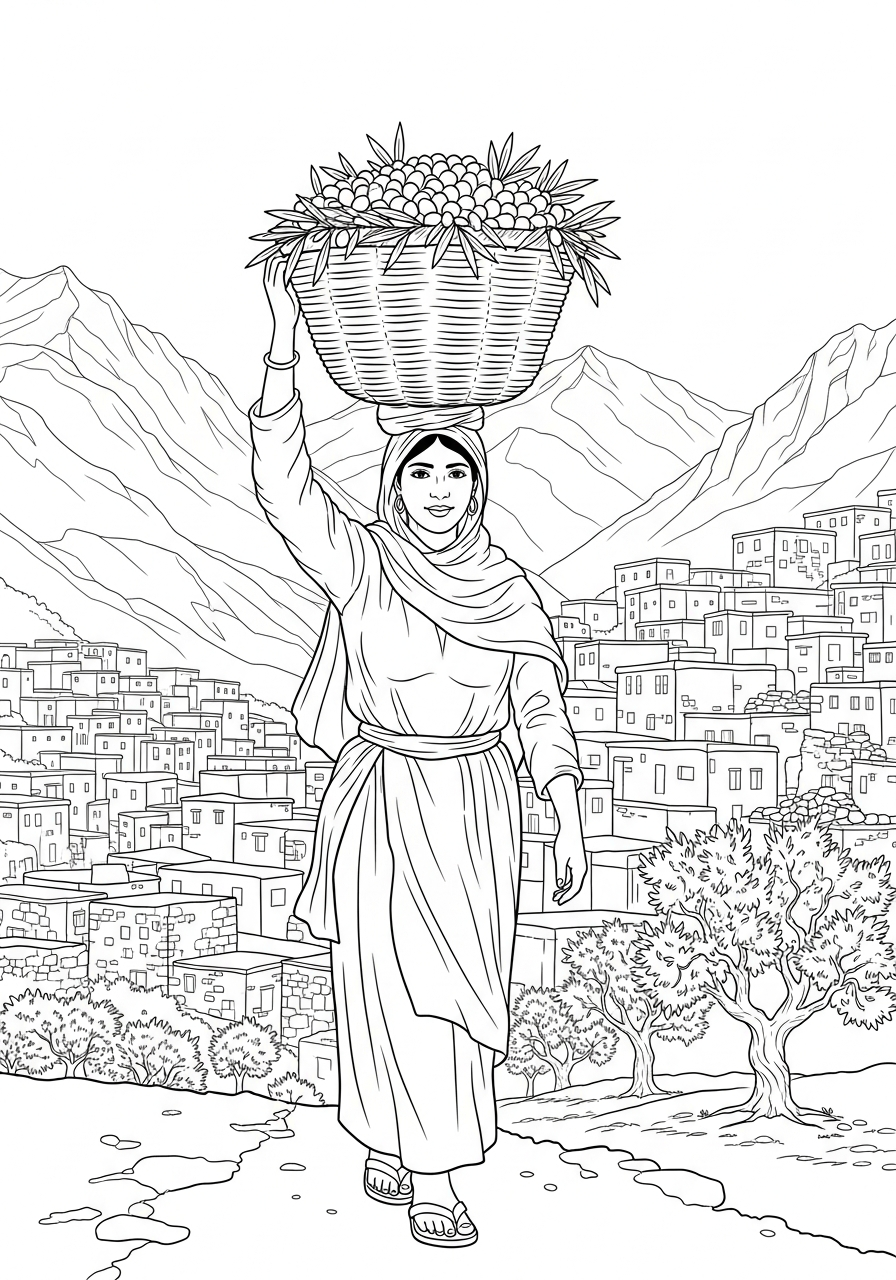 The Berber (Imazighen) people of Morocco. They call themselves “the free people.” Pray for freedom in Christ to reach the mountain villages of the Atlas.
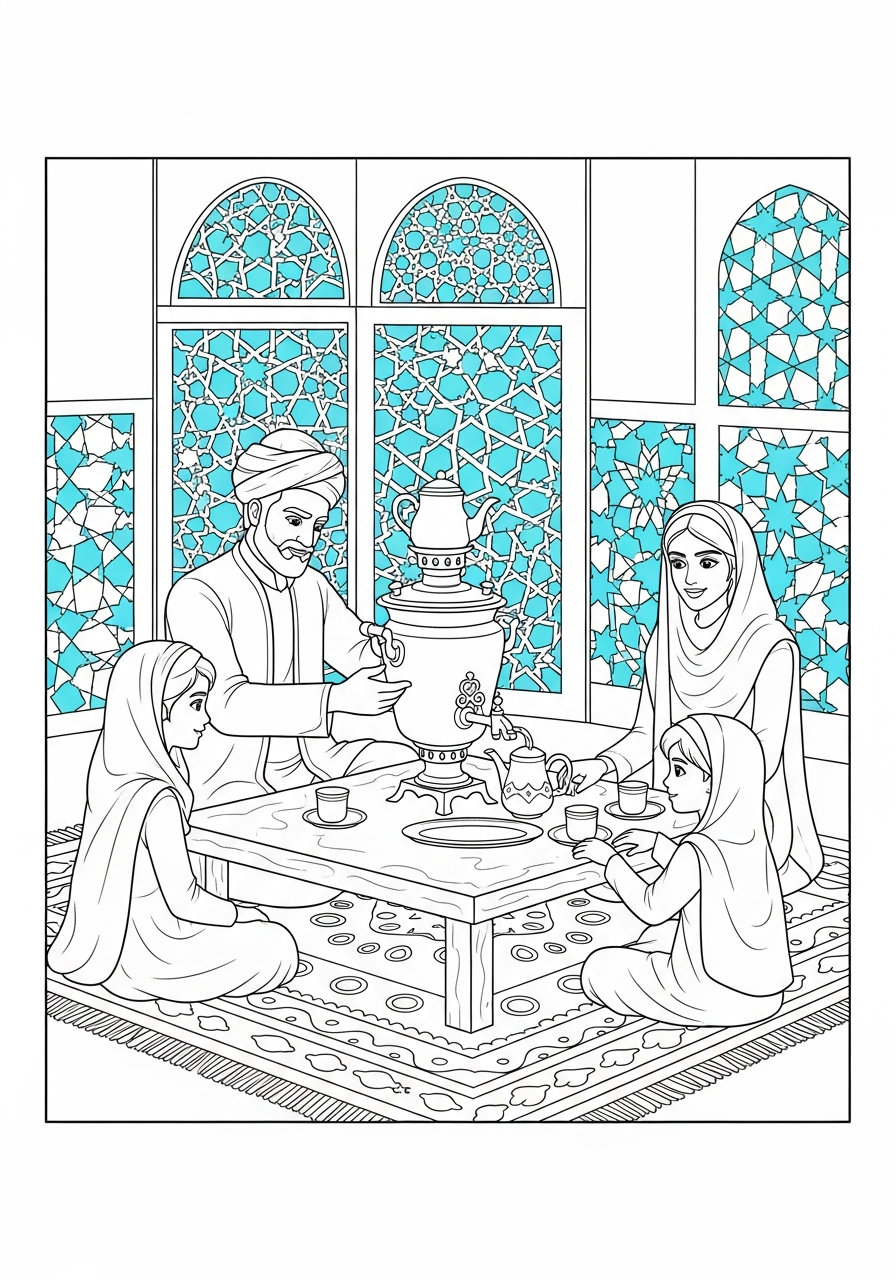 The Persian people of Iran. Persian hospitality always begins with tea. Pray for the underground church in Iran: growing, courageous, and in need of prayer.
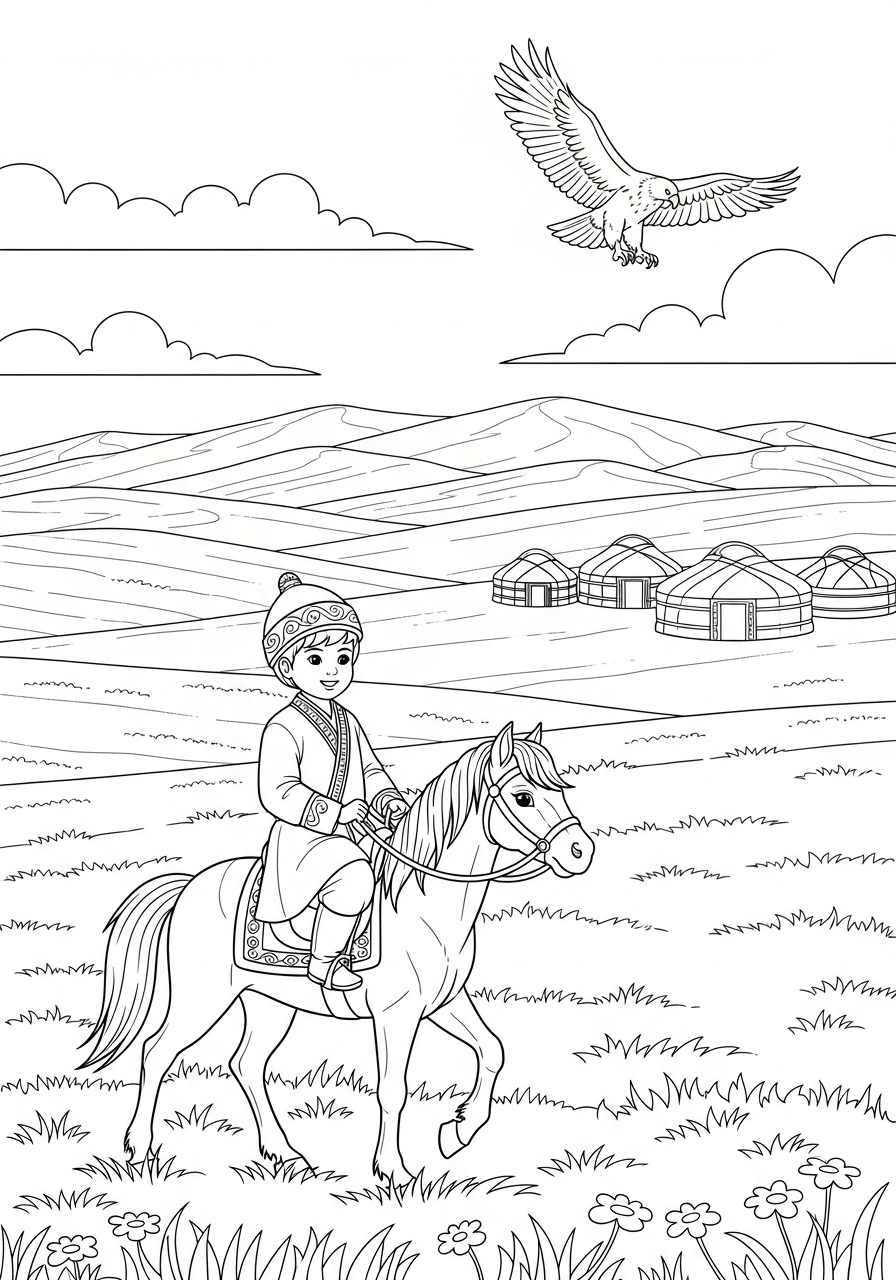 The Kazakh people of Kazakhstan. Pray for Kazakh believers, small in number but faithful, and for the gospel to spread across the steppe.
Pronunciation guides. If the people group is called the Baloch, write it as “Baloch (buh-LOHCH).” If the country is Kyrgyzstan, write “Kyrgyzstan (KUR-gih-stan).” Children will say the name out loud if they know how. They will skip it if they don’t.
Age-appropriate prayer points. For younger children (ages 4-7): “Ask God to send someone to tell them about Jesus.” For older children (ages 8-12): “Pray for the Bible translators working to put God’s Word into the Uyghur language.” For teenagers: “Pray that believers in this region would have courage to share their faith despite government restrictions.”
How to Make Your Own Prayer Cards
You don’t need a design degree. You need index cards, a printer, and fifteen minutes.
Step 1: Choose your people groups. Go to joshuaproject.net and pick 10-20 unreached people groups from different regions. Aim for variety, some in Africa, some in Asia, some in the Middle East, some in Central Asia.
Step 2: Gather the facts. For each group, write down: name, country, population, primary religion, primary language, whether the Bible exists in their language, and 2-3 prayer points.
Step 3: Find or draw an image. Joshua Project often includes a small representative photo. You can also use royalty-free images from sites like Unsplash or Pexels, search for the country or region and look for images that show everyday life. If you have artistic kids, let them draw the images. A child’s drawing of a Kazakh family outside a yurt is charming and memorable.
Step 4: Print and cut. Lay out the cards at index-card size (3x5 or 4x6). Print on cardstock if possible, the thicker paper holds up better in small hands and back pockets.
Step 5: Laminate (optional but recommended). A laminated card can survive a three-week residence in cargo shorts. An unlaminated one cannot.
Prayer Card Activities for Groups
If you lead a children’s ministry, co-op, or homeschool group, here are activities that turn prayer cards into shared experiences:
Prayer Card Trading
Give each child a prayer card at the beginning of the month. They read it, learn the facts, and pray for that people group all month. At the end of the month, they trade cards with someone else. Over the course of a year, each child has prayed for twelve different people groups. Some children become attached to certain cards and ask to keep them. Let them. That attachment is the whole point.
Prayer Card Map Match
Spread a large world map on the floor or table. Give each child a prayer card. They must find the country on the map and place their card on it. Then they pray for the people group by name. This combines geography with intercession, two skills that rarely meet in a classroom but pair beautifully.
Prayer Card Journals
Give each child a small notebook. When they receive a new prayer card, they glue or tape it into the journal and write a short prayer underneath it, in their own words, in their own handwriting. Over time, the journal becomes a personal prayer book for the nations. Some children illustrate theirs with flags, maps, or drawings of foods from that region. The journals are theirs to keep.
Prayer Card Chain
Cut strips of construction paper. Each time a child prays for a people group, they write the name on a strip and loop it into a growing paper chain. Hang the chain around the room. By the end of the semester, the chain stretches across walls and doorways, a physical, colorful reminder of sustained, faithful prayer.
If your family wants to go deeper into praying for specific people groups at home, our guide on how to pray for unreached people groups with your kids has age-by-age ideas from preschoolers through teenagers.
Where to Find Prayer Cards
Several missions organizations produce high-quality prayer cards for children:
- Joshua Project (joshuaproject.net), free printable people group profiles; not specifically designed for kids, but easy to adapt
- Operation World (operationworld.org), prayer guides organized by country with profiles suitable for older children
- Global Frontier Missions, produces prayer cards and resources designed for family and church use
- Your own church missions board, many churches create custom prayer cards for the missionary families they support, with photos and updates written in accessible language
Why Prayer Cards Matter
A prayer card is a small thing. Cardstock and ink. It fits in a pocket. It weighs almost nothing.
But it carries a name. And when a child learns a name, when they say “Fulani” or “Uyghur” or “Berber” or “Shaikh” out loud at their dinner table, in their car, in their bed at night, something shifts in the architecture of their faith. The world gets bigger. Their prayers get more specific. Their understanding of God’s heart for the nations moves from theory to practice, from “everyone everywhere” to “this person, in this place, right now.”
Daniel Cho still has that bent Berber prayer card. He is sixteen now. He keeps it in a box on his desk with the other cards he has collected over the years. Rohingya, Sundanese, Pashtun, Somali, Tibetan. He doesn’t pray for all of them every night anymore. But he prays for the Berber people. Still. Eight years later.
A piece of cardstock with flour-dusted hands on the front and five lines of text on the back changed the direction of a boy’s prayers. It can change your child’s too.
God does not need our prayer cards to reach the nations. But he invites us to use them, to hold a name in our hands and carry it to the throne. That invitation is open to the smallest hands in the house.
Brought to you by Wonder Letters
Monthly missions letters for families. 50% of profits support Global Serve International.