A Day in the Life
My name is Yassine and I am ten years old. I live in a city in northern Algeria, close enough to the Mediterranean Sea that on windy days I can taste the salt in the air. Algeria is the largest country in all of Africa, and I am proud of it. Most people do not know that. Now you do.
Every morning my mother makes breakfast in our kitchen while my father listens to the radio. She sets out round flatbread still warm from the pan, a bowl of soft butter, honey from the mountains, and sliced figues, figs that are dark purple on the outside and pink and seedy on the inside. We drink cafe au lait, strong coffee mixed with hot milk, from big ceramic bowls. My little sister holds her bowl with both hands and blows on it until the steam disappears. The bread tears apart in soft, stretchy pieces and the honey drips onto my fingers.
After breakfast I walk to school through the narrow streets of our neighborhood. Some of the buildings are old French colonial style with iron balconies and blue shutters, and some are newer with satellite dishes on every rooftop. Algeria was colonized by France for over 130 years, and my grandfather fought in the war for independence. He does not talk about the fighting, but he talks about the day Algeria became free. July 5, 1962. He says the whole country danced in the streets. His eyes get shiny when he tells that part.
On Fridays my father and I walk to the mosque together. The mosque in our neighborhood has a tall white minaret and green tile work around the doorway. Inside, the floor is covered in thick carpet and the room is cool even in summer. After prayers, we visit my grandmother. She always has food waiting, you cannot visit an Algerian grandmother without eating. She makes rechta, thin handmade noodles in a chicken and chickpea sauce flavored with cinnamon and turnips. The noodles are so thin she rolls and cuts them by hand on a wooden board, and it takes her all morning. She says the secret is patience. My cousin says the secret is butter.
The thing I love most is the evenings. After dinner, my family sits on the balcony. The air cools down and the streetlights come on. My father pours atay, sweet mint tea, from a small teapot, lifting the pot high above the glass so it froths. My uncle comes over and they play dominoes on a small folding table while my mother and my aunt talk and crack roasted sunflower seeds between their teeth. The shells pile up on a little plate. The sound of cracking seeds and clinking dominoes and laughter, that is what home sounds like to me.
In summer my family goes to the beach. The Mediterranean coast of Algeria has white sand and clear blue water, and the cliffs above are covered in pine trees. My cousins and I swim until our skin is salty and tight, then we sit on the rocks and eat makroud, semolina cookies stuffed with date paste and dipped in honey. They are crunchy on the outside and soft and sticky in the middle.
Have you ever eaten something on a beach that tasted better just because you were by the water?
I am Algerian Arab. We speak Algerian Arabic, which sounds different from the Arabic you might hear on the news. We are the people of the Mediterranean and the Sahara, of mint tea on balconies and grandmothers who show love with food. That is who we are.
Fun Facts
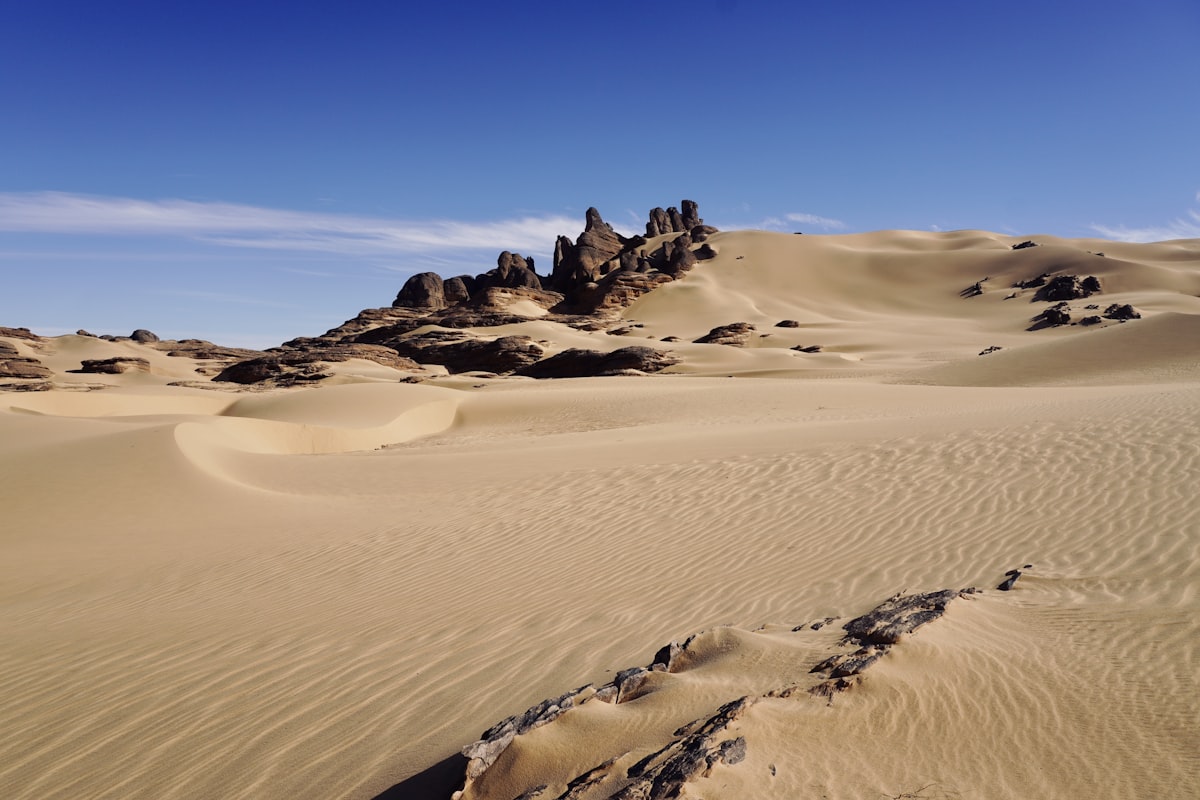
- Algeria is the largest country in Africa, it is roughly four times the size of Texas, and about 80 percent of it is covered by the Sahara Desert.
- The Casbah of Algiers, the capital city, is a maze of winding alleys, white-washed houses, and hidden courtyards built on a steep hillside overlooking the sea. It is a UNESCO World Heritage Site.
- Algerian Arabic (called Darja) mixes Arabic with French and Berber words, so it sounds very different from the Arabic spoken in Egypt or Saudi Arabia. Algerians sometimes joke that nobody else can understand them.
- Algeria fought one of the longest and hardest wars for independence in African history (1954-1962), and Algerians still celebrate Independence Day on July 5 as one of the most important days of the year.
- The Sahara Desert in southern Algeria contains the Tassili n’Ajjer plateau, where ancient rock paintings over 8,000 years old show giraffes, hippos, and rivers, proof that the Sahara was once green and full of life.
How to Pray for the Algerian Arab
- Pray that Algerian Arab families who gather on balconies for tea and conversation would have someone share the love of Jesus with them in their own Algerian Arabic, the language of their everyday lives.
- Pray for Algerian Arab children who are curious and full of questions, that God would place people in their lives who can tell them about the God who made the sea, the desert, and them.
- Pray that the New Testament in Algerian Arabic would reach more families, and that those who read it would understand God’s love and share it with their neighbors.
How Kids Can Help
- Pray: The next time you eat with your family around a table, pray for Algerian Arab families gathering on their balconies, ask God to open their hearts to His love.
- Learn: Find Algeria on a map and discover how big it really is. Learn one fact about the Casbah or the Sahara and tell your family about it.
- Share: Tell a friend about the Algerian Arab people, most people have never heard of them as an unreached group, even though there are 34 million of them.
- Give: Ask your parents about supporting Bible translation and radio ministries that broadcast the gospel in Algerian Arabic to North Africa.
Scripture to Remember
“And he made from one man every nation of mankind to live on all the face of the earth, having determined allotted periods and the boundaries of their dwelling place.” (Acts 17:26, ESV)