A Day in the Life
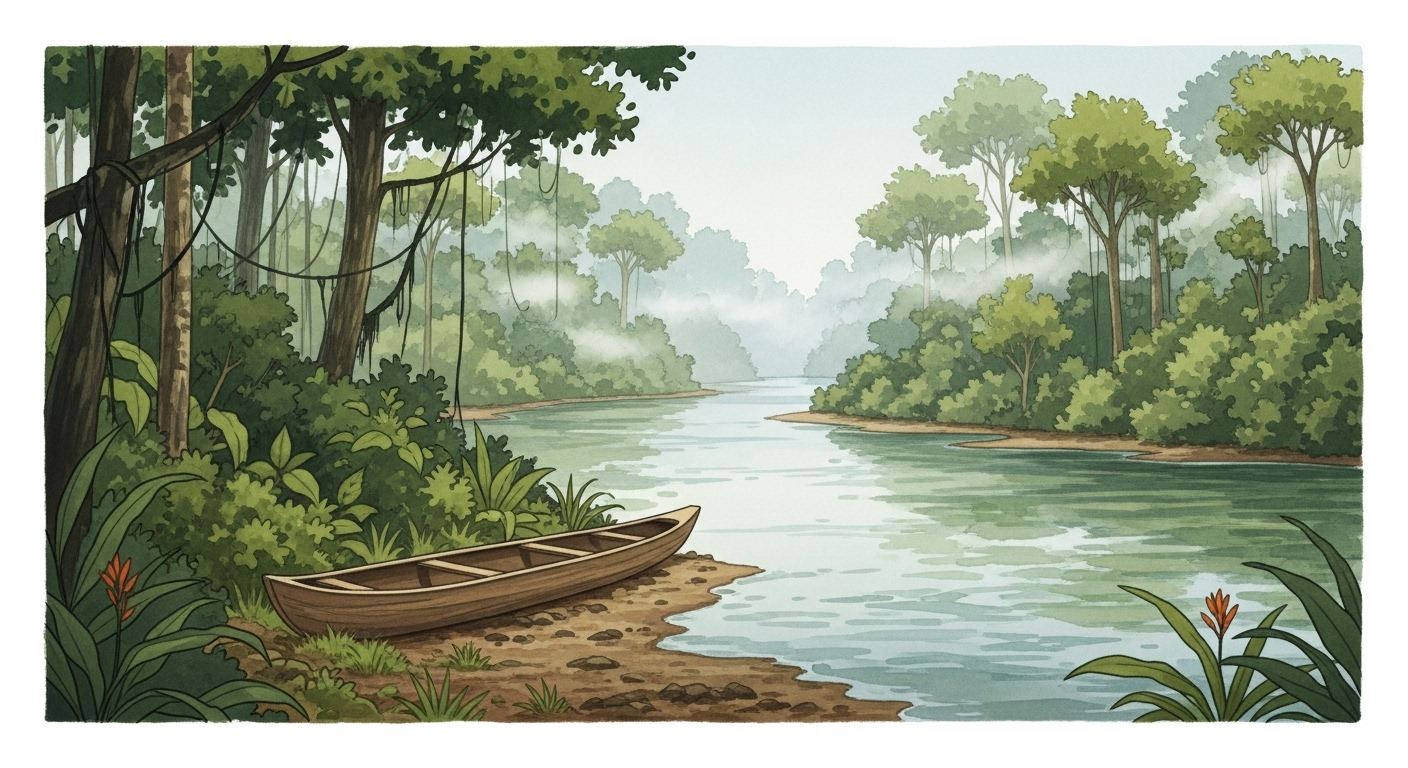
My name is Daniel, and my other name, my Ashaninka name, belongs to my family. I am ten years old, and my front yard is a river. We are the Ashaninka, the largest people of the Peruvian rainforest, and our villages follow the rivers the way your towns follow roads.
I wake when the forest wakes, which is loud. Parrots argue in the canopy, howler monkeys roll their thunder across the valley, and my mother fans the cooking fire under a pot of yuca, the root we eat at almost every meal. My father is already at the canoe. Today we check the fish traps and tend our chacra, the forest garden where we grow yuca, plantains, and cacao under the big trees.
I wear a cushma sometimes, the long woven robe of our people, dyed with seeds and bark. My grandmother painted my cheeks with red achiote for the village gathering last week. She says the designs tell who we are. We have been here, she says, since before anyone counted years.
School is in Spanish, but home is in Asháninka, the language that sounds to me like the river itself, quick in some places and slow in others. My grandfather tells stories at night about the old days, some of them sad. Our people have survived rubber bosses, lost land, and a terrible time of violence when he was young. We are still here. He says that like a whole sentence by itself.
Fun Facts
- The Ashaninka are the largest indigenous people group in the Peruvian Amazon, with communities also across the border in Brazil.
- Their homeland follows the rivers: the Ene, Tambo, Perené, and Ucayali. Many villages can only be reached by canoe.
- The cushma, a long handwoven cotton robe, is the traditional dress for both men and women.
- A chacra is a forest garden. Instead of clearing big fields, families grow yuca, plantains, and cacao in small patches among the trees.
- Achiote seeds make the bright red-orange paint used for face designs at celebrations.
- The Asháninka language has a New Testament, and translation and teaching work continues so that whole communities can hear Scripture in their heart language.
How to Pray for the Ashaninka
Pray for the believers among the Ashaninka, that churches along the rivers would grow deep roots and raise up their own pastors and teachers. Pray for the remote upriver communities that still have no one to teach them. Pray for protection of Ashaninka lands and forests, which face constant pressure from outside. And pray that the stories told around the night fires would more and more include the greatest story, in the language the river taught them.
How Kids Can Help
Find Peru on a map, then find the rivers east of the Andes where the rainforest begins. Trace one blue line with your finger and pray for the villages along it. Learn what yuca is and find it at a market if you can, since many groceries sell it as cassava. The January 2026 Wonder Letter was written from the perspective of an Ashaninka child, with a map, vocabulary, and activities, so your family can spend a whole month with this people.
Scripture to Remember
“He sends forth springs in the valleys; they flow between the mountains.” (Psalm 104:10)
The God who made the Ene and the Tambo knows every canoe on them, and every child asleep in every village along their banks.