A Day in the Life
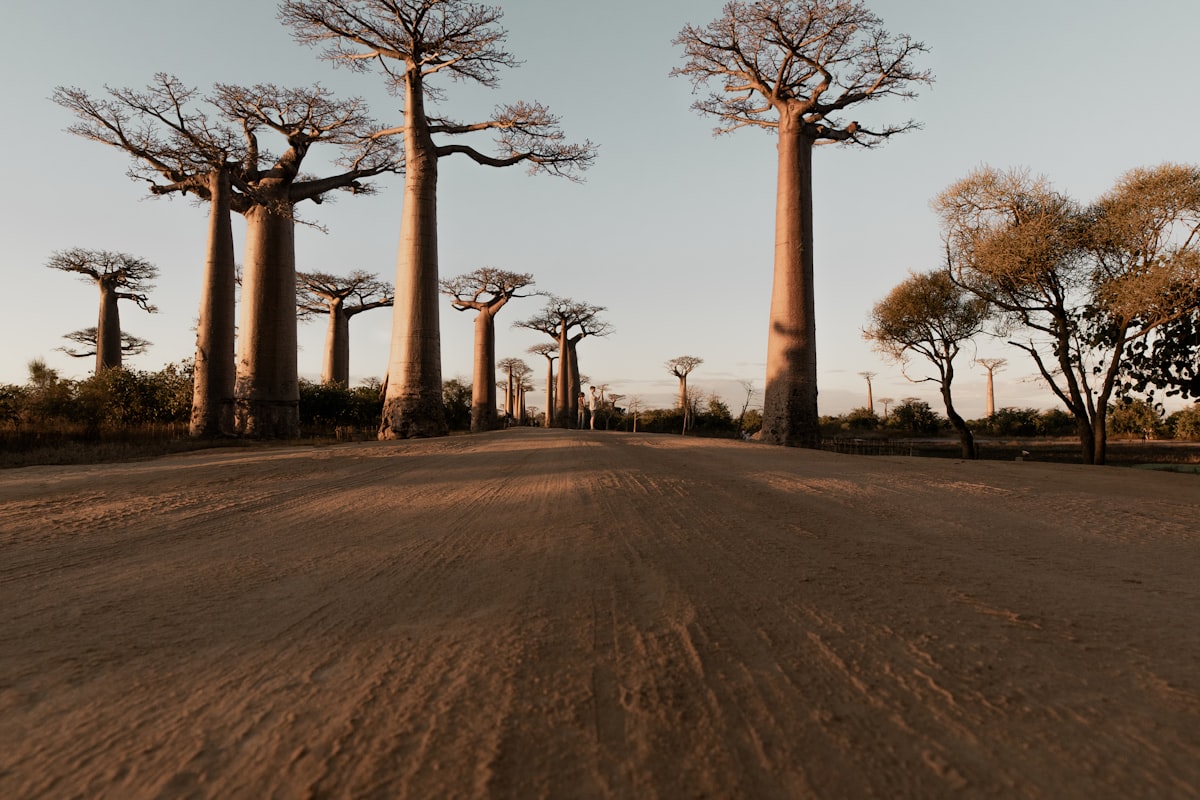
My name is Aminata and I am ten years old. I live in a village in Mali, in West Africa, where the earth is red and the sky is enormous. Our village is a circle of mud-brick houses with flat roofs, and in the center stands a giant baobab tree so thick that six grown men holding hands cannot reach around it. My grandmother says the baobab was here before anyone can remember. Its bark is smooth and gray like an elephant’s skin, and when it fruits, we crack open the hard pods and eat the powdery white pulp inside. It tastes sour and chalky and we mix it into water to make a cold drink.
Every morning my mother pounds millet in a tall wooden mortar. She lifts the heavy pestle above her head and brings it down. THUMP, THUMP, THUMP. The sound carries across the village and you can hear other mothers pounding too, like drums talking to each other. Millet is a grain that grows in the hot, dry soil where rice and wheat cannot survive. My mother grinds it into flour and cooks it into to, a thick porridge we shape into balls with our fingers and dip into a sauce of okra, tomatoes, and dried fish. To is what we eat almost every day, and I never get tired of it because my mother’s sauce is the best in the village.
After I help with breakfast, I carry a plastic basin on my head to the well to fetch water. The well is at the edge of the village and the women and girls line up in the early morning before the sun gets too strong. I can balance the full basin on my head without holding it, it took me two years to learn. Can you balance something on your head? It is harder than it looks.
My favorite time is when the griot comes to our village. A griot is a storyteller and musician, in Bambara we say jeli. The griot knows the history of every family in the region going back hundreds of years. He plays the kora, a stringed instrument made from a large calabash gourd covered in cowhide with twenty-one strings. The sound is like water running over smooth stones. When the griot sings, the whole village gathers under the baobab tree and listens. He tells stories of ancient Bambara kings and warriors, and sometimes he makes up funny songs about people in the crowd and everyone laughs.
My mother is also a potter. She collects red clay from the riverbank of the Niger River, which flows not far from our village. She shapes the clay into round cooking pots and water jars using only her hands, no wheel, no tools. After they dry in the sun, she fires them in a pit covered with straw and dried cow dung. The fire burns hot and orange and the smoke rises straight up into the sky. Her pots are smooth and strong and she sells them at the weekly market.
On Fridays the men go to the mosque, but my grandmother also keeps older Bambara traditions. She pours water at the base of a special tree and speaks to the ancestors, asking them to watch over our family. She says the spirits of the land are everywhere, in the river, in the baobab, in the wind. She is not afraid of them. She says they are part of us.
In the evenings we sit outside under the stars and my father tells riddles. My favorite one is: “What fills a room but takes up no space?” The answer is light. What would your answer be?
I am Bambara. We are the storytellers and the potters, the children of the baobab and the Niger River. Our griots carry our history in their voices, and our mothers carry our future in their hands. We are the Bambara, and we are loved by God.
Fun Facts
- The Bambara are the largest ethnic group in Mali and their language, Bamanankan, is the most widely spoken language in the country, even non-Bambara people use it at markets.
- The griot (storyteller) tradition is one of the oldest oral history systems in the world, griots memorize family genealogies going back 40 or more generations without writing anything down.
- The kora instrument has 21 strings and is made from a calabash gourd cut in half and covered with animal skin, its sound has been compared to a harp and is unique to West Africa.
- Baobab trees can live for over 1,000 years and store up to 30,000 gallons of water inside their trunks, which helps them survive the long dry seasons of the Sahel.
- Bambara women are famous for their pottery, which they shape entirely by hand without a potter’s wheel, a skill passed from mother to daughter for centuries.
How to Pray for the Bambara
- Pray that Bambara families who gather under the baobab tree to hear the griot’s stories would also hear the greatest story ever told, the story of Jesus.
- Pray for Bambara mothers like Aminata’s who work so hard each day, that God would provide for their families and make Himself known to them.
- Pray that the complete Bible in Bamanankan would reach Bambara villages and that people would read it and be drawn to God’s love.
How Kids Can Help
- Pray: Every time you hear music, remember the Bambara griot and his kora, and pray that the Bambara people would hear a new song, the song of God’s love for them.
- Learn: Find Mali on a map of West Africa and trace the Niger River. Learn what life is like in the Sahel region and share it with your family.
- Share: Tell a friend about the Bambara people and their storytelling tradition, and how they need someone to share God’s story with them.
- Give: Ask your parents about supporting Bible distribution or clean water projects in Mali, where many villages depend on a single well.
Scripture to Remember
“Oh sing to the LORD a new song; sing to the LORD, all the earth! … Declare his glory among the nations, his marvelous works among all the peoples!” (Psalm 96:1, 3, ESV)