A Day in the Life
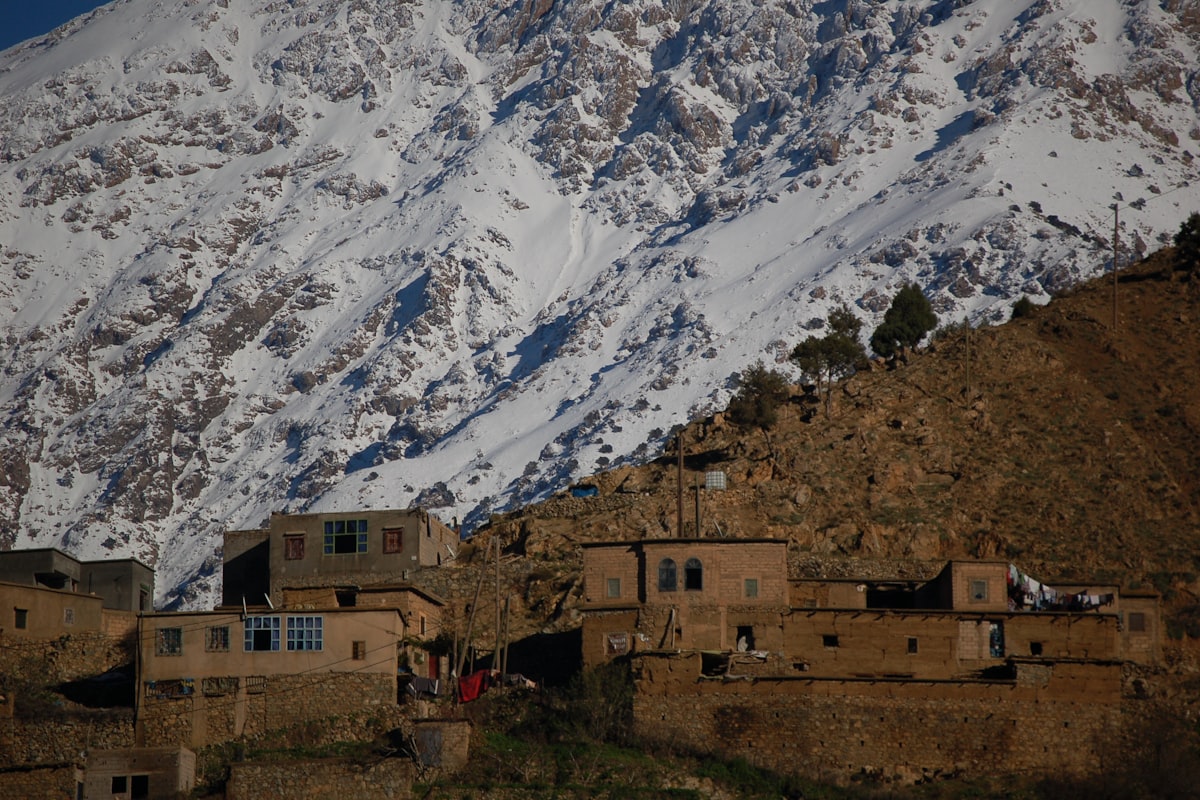
My name is Fatima and I am ten years old. I live in a village high up in the Atlas Mountains of Morocco. From the rooftop of my house, I can see the whole valley, terraced fields of barley, walnut trees, and red clay houses stacked on the hillside like steps. In winter, the mountaintops are covered in snow. I think my village is one of the most beautiful places in the world.
We call ourselves Imazighen, which means “free people.” That is the name we have used for ourselves since before anyone can remember. We have our own alphabet too, called Tifinagh, the letters are made of straight lines and circles and dots, and they look nothing like Arabic or English. My grandmother taught me to write my name in Tifinagh before I could write it in any other script.
Every morning my mother wakes up early to light the fire for tea. She makes sweet mint tea in a silver teapot and pours it from high above the glass so it gets frothy on top. We drink it with flatbread and olive oil. Sometimes she adds a dish of soft white cheese and a handful of almonds. The almonds grow on trees right outside our village, in spring, the almond blossoms make the whole hillside look pink and white.
After breakfast I walk down the stone path to school. The path is steep and my shoes scuff against the rocks. In the afternoon, I help my mother make couscous. She rolls the semolina grains between her palms with a little water and flour until tiny pellets form, then steams them over a pot of vegetables, turnips, carrots, zucchini, and chickpeas in a broth flavored with saffron and cumin. The steam smells like everything good in the world. On Fridays, the couscous has lamb on top because Friday is the special day.
My mother also works with argan oil. The argan trees grow only in Morocco, nowhere else on Earth. The nuts have a hard shell that you crack open with a stone, and inside is a tiny kernel that gets pressed into oil. Women in our village sit together in a circle, cracking the nuts and talking and laughing. The oil tastes rich and toasty. We use it on bread, on couscous, and my aunt even puts it in her hair.
On market day, my father loads our donkey with wool blankets and sacks of walnuts and we walk down to the souk in the valley. The souk is loud and colorful, there are piles of spices in every shade of yellow and red, stacks of leather bags, and women selling handwoven carpets with diamond patterns in crimson and black. I like the smell of the spice stalls best. Have you ever been to a market where you could smell the spices before you could even see them?
In the evenings, my grandmother tells stories about the old days, about Imazighen warriors and wise women and the mountains that have protected our people for thousands of years. She says the mountains are our walls and the stars are our roof. When she talks like that, I feel like I belong to something very big and very old.
What is the oldest story someone in your family has told you?
Fun Facts
- The Berber people have lived in North Africa for over 4,000 years, long before the Arabs, Romans, or French arrived, making them one of the oldest known cultures on the continent.
- Tifinagh, the Berber alphabet, was once nearly forgotten but has been revived and is now taught in Moroccan schools, the letters look geometric and angular, like ancient symbols carved in stone.
- The argan tree grows only in Morocco and can live for 200 years. Goats actually climb into argan trees to eat the fruit, and you can sometimes see five or six goats standing in the branches at once.
- Berber carpets are world-famous. Each village has its own patterns, and weavers work from memory, no written instructions, passing designs from mother to daughter across generations.
- Mint tea in Morocco is poured from high above the glass (sometimes two feet or more) to create foam on top. It is considered rude to refuse a glass, and guests are always offered at least three cups.
How to Pray for the Berber
- Pray that Berber families gathering around mint tea and couscous on Fridays would have the chance to hear about Jesus in Tamazight, the language of their hearts.
- Pray for Berber girls in remote mountain villages who want to learn and grow, that God would open doors for their education and for His Word to reach their homes.
- Pray that the New Testament in Tamazight would spread from village to village across the Atlas Mountains, and that whole families would come to know God together.
How Kids Can Help
- Pray: This week, when you eat a meal with your family, pray for Berber families sitting together around their couscous, ask God to make Himself known to them.
- Learn: Look up the Tifinagh alphabet and try writing your name using its letters, then share what you learned about the Imazighen with your family.
- Share: Tell a friend or classmate about the Berber people and their 4,000-year-old culture, most people do not know they exist.
- Give: Ask your parents about supporting Bible translation and distribution efforts that bring Scripture to Tamazight-speaking Berber communities in Morocco.
Scripture to Remember
“For the LORD your God is God of gods and Lord of lords, the great, the mighty, and the awesome God, who is not partial and takes no bribe.” (Deuteronomy 10:17, ESV)