A Day in the Life
My name is Zahra and I am ten years old. I live in Iraq, in a city near the Tigris River. The Tigris is wide and brown and runs right through the heart of everything. My teacher says that thousands of years ago, the land between the Tigris and the Euphrates rivers was called Mesopotamia, and it was where people first learned to write, first built cities, and first planted wheat. I like knowing that my country was the beginning of so many things.
Every morning my mother makes samoon, diamond-shaped bread with a soft, fluffy inside and a golden crust on top. She bakes it in the oven before anyone else is awake, and the smell fills our whole apartment. We eat it with clotted cream called gaymar, which is thick and white and slightly sweet. Sometimes she spreads date syrup on top, dark and sticky, made from the dates that grow on the palm trees along the river. Bread, gaymar, and date syrup together is my favorite breakfast in the world. My father drinks strong tea with it. The tea comes in a small glass with a gold rim, and he always puts too much sugar in.
After school I walk with my brother Mustafa along the riverbank. There is a park near the water where families sit on blankets in the grass and children play. Old men sit at small tables under the palm trees and play tawla, which is a board game you might call backgammon. They slam the pieces down and argue about every move, but they are laughing the whole time. Mustafa always stops to watch them because he wants to learn.
My grandmother lives with us and she is the center of our family. Every Friday she cooks biryani, layers of golden rice with lamb, almonds, raisins, and spices like saffron and cardamom. The pot is huge and the rice at the bottom gets crunchy and caramelized. We call that crunchy bottom layer hakkaka and everyone fights over it. Have you ever had a food that the whole family argues about who gets the last piece? That is hakkaka for us.
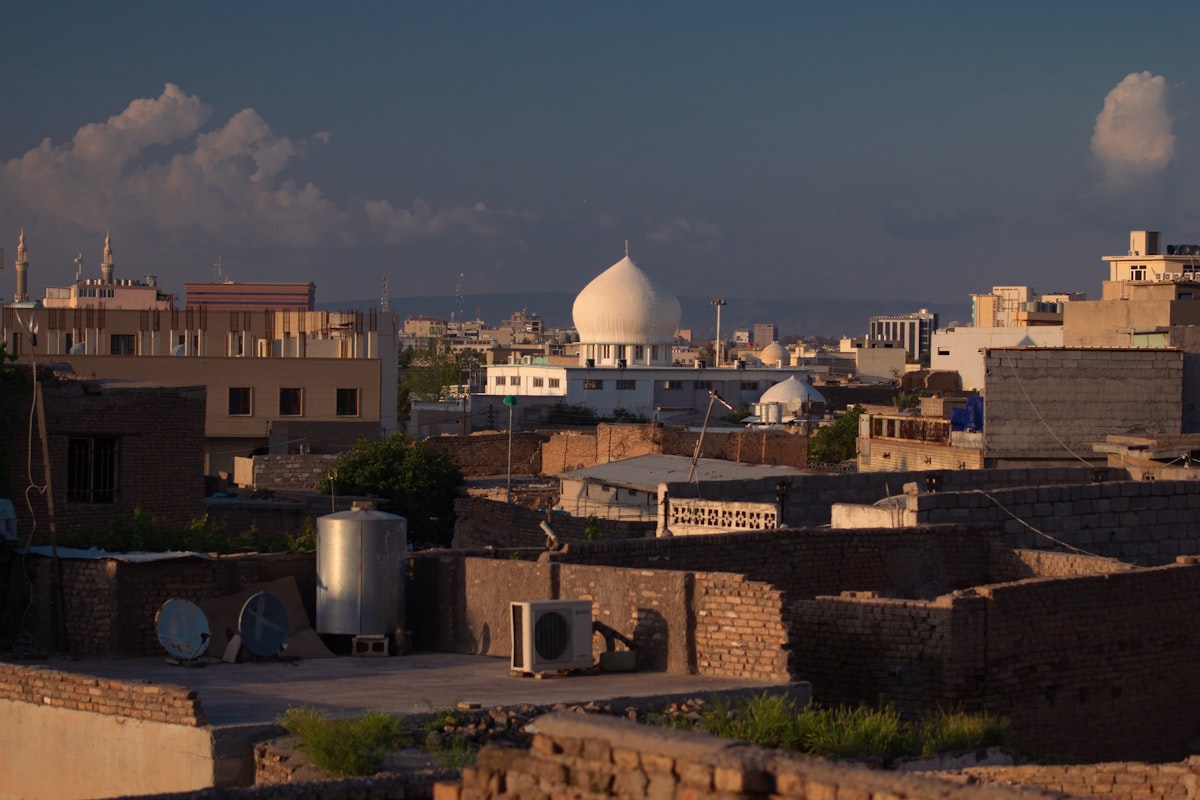
On Fridays my father and Mustafa go to the mosque for afternoon prayers. The mosque in our neighborhood has a tall blue dome and tiles with patterns in turquoise and white. When the sunlight hits the dome, it glows. My father says prayer is the most important thing a person can do. He prays five times a day, sometimes I hear him in the early morning before dawn, murmuring softly in the dark.
In the evenings my family goes to the chai khana, the tea garden. Tea gardens are everywhere in Iraq, outdoor places with chairs and tables where people sit for hours drinking glass after glass of sweet black tea, eating sunflower seeds, and talking. My father meets his friends there and they talk about everything: work, football, the news, their children. My mother sits with her sisters and they laugh so loud I can hear them from across the garden. I run around with my cousins between the tables and nobody tells us to be quiet.
My grandmother sometimes tells me about ancient Babylon, which was not far from where we live. She says the Hanging Gardens were one of the wonders of the old world, and that the great king Nebuchadnezzar built a gate covered in blue tiles with golden lions and dragons. I have seen pictures of it. I want to be an archaeologist when I grow up and dig up things that have been buried for thousands of years. What do you want to be when you grow up?
I am Iraqi Arab. We are the people of the two rivers, of date palms and tea gardens, of a land where civilization itself began. My grandmother says Iraq’s story is the world’s story. We are the Iraqi Arabs, and we are loved by God.
Fun Facts
- Iraq is home to the Tigris and Euphrates rivers, and the land between them, called Mesopotamia, is often called “the cradle of civilization” because writing, the wheel, and the first cities were all developed there.
- Iraq is one of the world’s largest producers of dates, over 30 million date palm trees grow in the country, and dates are eaten at almost every Iraqi meal.
- Samoon bread has a distinctive diamond shape found nowhere else in the Middle East. Iraqi bakers shape each loaf by hand and bake them in stone ovens that reach extreme temperatures.
- The ancient city of Babylon, with its famous Ishtar Gate covered in glazed blue bricks and golden animal reliefs, was located about 50 miles south of modern-day Baghdad.
- Tea gardens (chai khanas) are central to Iraqi social life, families and friends gather there daily, and it is common for people to drink ten or more small glasses of sweet black tea in a single evening.
How to Pray for the Iraqi Arab
- Pray for Iraqi Arab families who gather at the tea garden every evening, that God would place believers in their lives who can share the hope of Jesus over a cup of tea.
- Pray for Iraqi children like Zahra and Mustafa who are growing up in a country that has faced war and hardship, that God would comfort them and give them peace.
- Pray for the translation of the full Bible into Mesopotamian Arabic, so that Iraqi families can read God’s Word in the language they speak at home and understand His love for them.
How Kids Can Help
- Pray: Every time you eat bread or dates, remember Iraqi children and pray that they would learn about Jesus, who called Himself the Bread of Life.
- Learn: Find the Tigris and Euphrates rivers on a map and learn about ancient Mesopotamia, then share with your family that millions of people in this historic land still have not heard the gospel.
- Share: Tell your Sunday school class about the Iraqi Arab people and how they need both prayer and the full Bible translated into their spoken language.
- Give: Ask your parents about supporting Bible translation or humanitarian organizations that serve families in Iraq.
Scripture to Remember
“For God so loved the world, that he gave his only Son, that whoever believes in him should not perish but have eternal life.” (John 3:16, ESV)