A Day in the Life
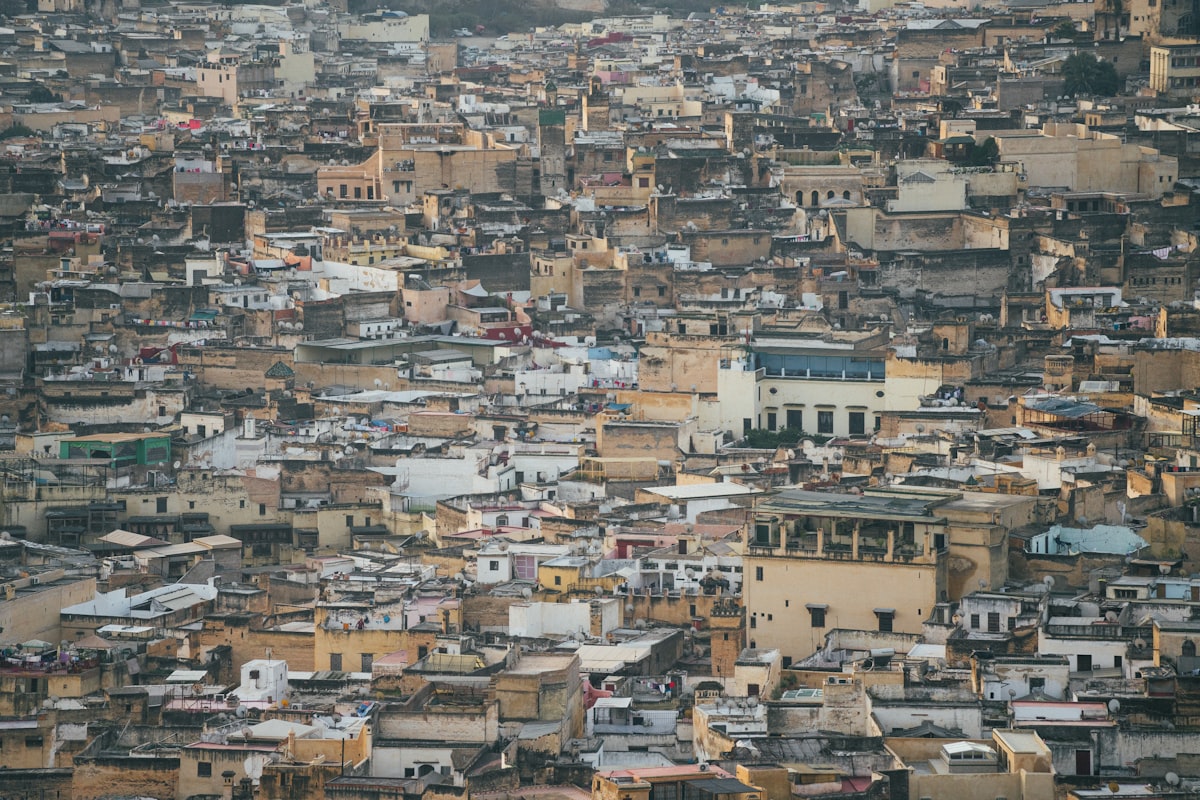
My name is Amina and I am ten years old. I live in a city in Morocco, inside the medina, the old walled part of town where the streets are so narrow that two donkeys cannot pass each other at the same time. The walls are painted in every shade of blue and white and yellow, and the doors are made of heavy wood studded with iron nails. My grandmother says our medina has looked this way for five hundred years. I believe her, because the stones under my feet are worn smooth from all the people who have walked on them.
Every morning my mother bakes msemmen, square-shaped flatbread folded in layers with butter and a little semolina between each fold. She cooks them on a flat griddle until they are golden and crispy on the outside and soft and flaky in the middle. We eat them with honey and a glass of mint tea. The tea is always sweet, my father says Moroccan mint tea should be “strong as life, sweet as love, and gentle as death.” That is a saying everyone here knows. Have you ever heard a saying like that about a drink in your country?
After breakfast I walk through the medina to school. I pass the leather tanneries where men stand in giant stone vats of colored dye, orange, red, brown, yellow, up to their waists, pushing the hides down with their feet. The vats look like a painter’s palette from above, round circles of color arranged in rows. The smell is strong, they use pigeon droppings and limestone to soften the leather before dyeing it. My friends and I hold our noses and walk fast, but I always look. I think the colors are beautiful, even if the smell is not.
On my way home from school, I stop at the spice stall in the souk, the market, to buy cumin for my mother. The spice man scoops it from a big pyramid of golden powder into a paper cone. The pyramids of spice are arranged in perfect peaks, cumin, turmeric, paprika, cinnamon, saffron, and the air around the stall is warm and thick with scent. The souk also has stalls selling brass lanterns, hand-painted ceramics, woven baskets, and slippers made from soft goat leather in pink, gold, and turquoise.
My favorite night of the year is the first night of Ramadan. My whole family gathers at my grandmother’s house to break the fast. She makes harira, a thick soup of tomatoes, lentils, chickpeas, and cilantro with a squeeze of lemon. Beside the soup there are dates, hard-boiled eggs, and chebakia, flower-shaped pastry dipped in hot honey and rolled in sesame seeds. The chebakia is so sticky it pulls apart in thin crunchy strands. After we eat, the whole neighborhood comes alive. People visit each other, children play in the streets under the stars, and the air smells like fried dough and orange blossoms.
On weekends, my father takes me to Jemaa el-Fnaa, the great square. At night it transforms, storytellers sit cross-legged on the ground with crowds around them, musicians play drums and metal castanets called qraqeb, and snake charmers coil cobras in baskets. The smoke from a hundred food stalls drifts across the square and the lanterns make everything glow orange. My father buys me a glass of fresh-squeezed orange juice from a cart and we sit on a bench and watch the whole world pass by.
What is the busiest, most colorful place you have ever visited?
I am Moroccan Arab. We are people of the medina and the souk, of mint tea poured from high above the glass and grandmothers whose kitchens smell like cinnamon and honey. This is my home, and I love every stone of it.
Fun Facts
- Jemaa el-Fnaa square in Marrakech has been a gathering place for storytellers, musicians, and traders for over a thousand years. UNESCO declared its oral traditions a “Masterpiece of the Oral and Intangible Heritage of Humanity.”
- The leather tanneries of Fez have been operating for nearly 1,000 years using almost the same methods, the stone vats of colorful dye are one of the most photographed sights in Morocco.
- Morocco is the world’s largest exporter of phosphates (a mineral used in fertilizer), and it also produces more than half the world’s supply of argan oil, which comes from a tree found only in Morocco.
- Moroccan mint tea is considered a symbol of hospitality. Refusing a glass is seen as impolite, and the tea is always poured from high above the cup to create a layer of foam, a skill that takes practice.
- Chebakia, the honey-dipped sesame pastry, is shaped by hand into a flower with exactly eight petals. Moroccan families make hundreds of them before Ramadan, and the recipe is passed from mother to daughter.
How to Pray for the Moroccan Arab
- Pray that Moroccan Arab families who gather each evening during Ramadan to break their fast and visit their neighbors would hear about Jesus, the one who said, “I am the bread of life.”
- Pray for Moroccan Arab children growing up in the medinas and cities of Morocco, that God would put someone in their lives who will share His love with them in Moroccan Arabic.
- Pray for more of God’s Word to be translated into Moroccan Arabic (Darija), right now only portions of the Bible are available, and many families have never held a single page of Scripture.
How Kids Can Help
- Pray: The next time you smell cinnamon, honey, or mint, let it remind you to pray for Moroccan Arab kids like Amina who grow up surrounded by those same scents every day.
- Learn: Look up pictures of Jemaa el-Fnaa square or the tanneries of Fez and learn one new thing about Morocco to share with someone this week.
- Share: Tell a friend that there are 26 million Moroccan Arabs and almost none of them have heard the good news about Jesus, that fact alone is worth sharing.
- Give: Ask your parents about supporting Bible translation into Moroccan Arabic and ministries that serve unreached families in North Africa.
Scripture to Remember
“How beautiful upon the mountains are the feet of him who brings good news, who publishes peace, who brings good news of happiness, who publishes salvation, who says to Zion, ‘Your God reigns.’” (Isaiah 52:7, ESV)