Great Commission Bible Verses
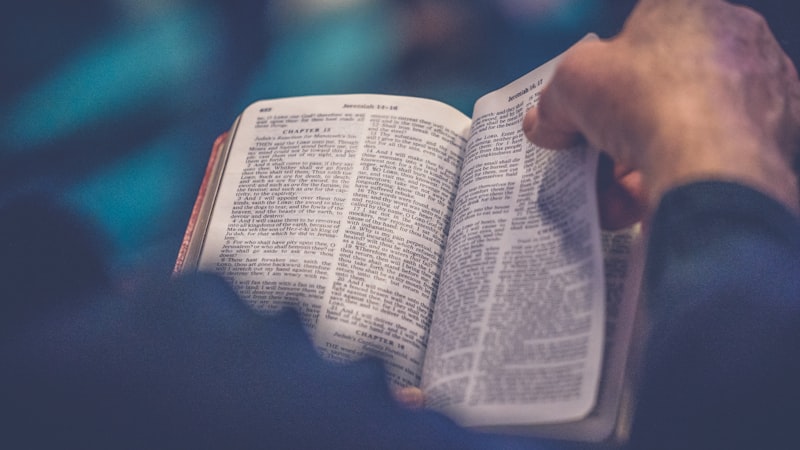
The bedroom smelled like lavender detergent and the faint rubber scent of the nightlight plugged into the wall behind the dresser. Eight-year-old Norah was propped against her pillow, her quilt pulled up to her ribs, one bare foot sticking out the side because she ran warm even in January. Her father sat on the edge of the bed with a Bible open in his lap, the leather cover cracked along the spine from years of use. He had just read Matthew 28:18-20 aloud, the verses about going to all nations, the ones their pastor had preached about that Sunday morning.
Norah was quiet for a moment. She pulled at a loose thread on the quilt’s binding. Then she looked up.
“Dad, is that the only place in the Bible that says to go to all the nations?”
He smiled. It was the kind of smile that meant she had asked exactly the right question.
“No, sweetheart. It’s everywhere. Let me show you.”
He flipped backward through the pages, past the thin paper of the epistles, past Acts, past the Gospels, past the prophets, all the way back to Genesis. He found the verse and read it aloud, his finger tracing the line: “in you all the families of the earth shall be blessed.” Then he turned forward, through the Psalms, the prophets, the story of a reluctant man on a boat in a storm, all the way to the last book, where a multitude no one could count stood before a throne singing in every language ever spoken.
“It starts here,” he said, tapping Genesis. “And it ends here.” He turned to Revelation. “And everything in between is the same story.”
That is the truth most families never discover about the Great Commission. We treat it as a single verse, Matthew 28:19, a standalone command Jesus gave on a hillside before he ascended. But the Great Commission is not one verse. It is the heartbeat of the entire Bible. From the first book to the last, from a promise to an old man in Mesopotamia to a vision of a numberless crowd singing before the throne of God, the whole of Scripture tells one story: God will be worshiped by people from every nation, tribe, language, and people on the face of the earth. And he will use his people to make it happen.
If your family is exploring how to teach kids about world missions, understanding the great commission in the Bible as a whole-book story rather than a single passage changes everything. It moves missions from a department of the church to the purpose of the church. It transforms the Great Commission from a verse your kids memorize into a current they can feel running beneath every page of Scripture.
This article walks through every major great commission Bible verse from Genesis to Revelation. Read it together. Take it slowly. And watch what happens when a child realizes that the story of God’s heart for the nations is not a chapter in the Bible. It is the Bible.
Before the Great Commission: Genesis
The story begins with a seventy-five-year-old man named Abram standing in a dry, flat stretch of Mesopotamia, squinting against the white glare of a sun that baked the clay beneath his sandals. He was a nomad. He owned livestock, tents, a few servants. He had no children. His wife Sarai was barren, a fact that in his culture carried the weight of a curse, a closed door, a dead end.
And God spoke to him.
“Now the LORD said to Abram, ‘Go from your country and your kindred and your father’s house to the land that I will show you. And I will make of you a great nation, and I will bless you and make your name great, so that you will be a blessing. I will bless those who bless you, and him who dishonors you I will curse, and in you all the families of the earth shall be blessed.’” (Genesis 12:1-3, ESV)
All peoples on earth. Not the people of Canaan. Not the people of the Ancient Near East. Not the people who already knew God. All peoples. Every clan cooking over every fire on every continent that Abram could not have imagined. God’s plan was global before there was a word for global.
This is the first great commission scripture in the Bible, and it deserves the weight of that title. Everything that follows, the law, the prophets, the exile, the incarnation, the cross, the empty tomb, the church, the mission, all of it flows from this moment. God chose one family not to keep the blessing but to carry it outward. Abraham’s election was never about exclusion. It was about distribution. God blessed one so that one could bless all.
He said it again in Genesis 18:18:
“seeing that Abraham shall surely become a great and mighty nation, and all the nations of the earth shall be blessed in him” (ESV)
And again, after the gut-wrenching test on Mount Moriah, after Abraham lifted the knife over his son and the angel stopped his hand:
“and in your offspring shall all the nations of the earth be blessed, because you have obeyed my voice.” (Genesis 22:18, ESV)
Three times in Genesis alone, God stated his intention. The repetition is not accident. It is emphasis. It is a father saying to his children: Listen. I mean this. I am telling you what the whole story is about.
A child who understands Genesis 12:1-3 has a framework for the entire Bible. Everything afterward is God keeping that promise.
The Psalms: God’s Heart on Display
If Genesis gives the blueprint, the Psalms give the soundtrack. The Psalms are not merely a collection of prayers and songs for Israel’s private worship. They are a missions hymnal. They pulse with the conviction that the God of Israel is not a tribal deity content with one nation’s praise. He is the God of all the earth, and he intends to be known as such.
Psalm 2:8 records God the Father speaking to the Son:
“Ask of me, and I will make the nations your heritage, and the ends of the earth your possession.” (ESV)
This is not a gentle suggestion. It is a royal decree. The nations, all of them, are the inheritance of the Son. They belong to him. And they will be given to him.
Psalm 22 begins with the cry Jesus would echo from the cross: “My God, my God, why have you forsaken me?” But it does not end there. It ends with this:
“All the ends of the earth shall remember and turn to the LORD, and all the families of the nations shall worship before you.” (Psalm 22:27, ESV)
The psalm that begins with the darkest moment in human history ends with the brightest: every family of every nation worshiping. The cross was never merely about individual salvation. It was about the nations.
Then there is Psalm 67, perhaps the purest missions prayer in the Old Testament:
“May God be gracious to us and bless us and make his face to shine upon us, that your way may be known on earth, your saving power among all nations. Let the peoples praise you, O God; let all the peoples praise you! Let the nations be glad and sing for joy, for you judge the peoples with equity and guide the nations upon earth. Let the peoples praise you, O God; let all the peoples praise you!” (Psalm 67:1-5, ESV)
Read that aloud to your children and count how many times the psalmist says “all the peoples.” This is not a prayer for Israel to be blessed in isolation. It is a prayer for Israel to be blessed so that the blessing spills outward to every nation. The “so that” in verse 2 is the hinge of the entire psalm. Bless us, God, so that the world will know you. The purpose of God’s blessing on his people has always been the same: that his glory would reach every corner of the earth.
Psalm 96:3 puts it plainly:
“Declare his glory among the nations, his marvelous works among all the peoples!” (ESV)
The Psalms do not whisper about the nations. They shout. And every family that sings them is singing missions music, whether they realize it or not.
The Prophets: A Light to the Nations
The prophets saw further. They saw the servant of the Lord coming, and they saw what he would do, not just for Israel but for the whole world.
In Isaiah 42:6, God speaks to his servant:
“I am the LORD; I have called you in righteousness; I will take you by the hand and keep you; I will give you as a covenant for the people, a light for the nations.” (ESV)
A light for the nations. Not a light for Israel alone. A light for the nations who walked in darkness, who had never heard, who had no covenant and no promise and no prophet. A light for them, too.
Isaiah 49:6 sharpens the point even further:
“he says: ‘It is too light a thing that you should be my servant to raise up the tribes of Jacob and to bring back the preserved of Israel; I will make you as a light for the nations, that my salvation may reach to the end of the earth.’” (ESV)
Too small. God looked at the restoration of Israel, a breathtaking work in itself, and called it too small. His ambitions were larger than one nation. His salvation was designed for the ends of the earth. If your children ever wonder whether God cares about unreached people groups in remote villages and distant cities, Isaiah 49:6 is the answer. He does. And restoring Israel was only the beginning.
Then there is Jonah, the most reluctant missionary in all of Scripture, and perhaps the most important missions text in the Old Testament. God told Jonah to go to Nineveh, the capital of Assyria, Israel’s enemy. Jonah ran the other direction. He boarded a ship. God sent a storm. Jonah was swallowed by a great fish, spent three days in the dark, praying from the belly of the deep, and was vomited onto a beach. He went to Nineveh. He preached. The entire city repented.
And Jonah was furious.
He sat on a hill outside the city, fuming in the heat, angry that God had shown mercy to the enemy. God grew a vine to shade him, then killed the vine, and when Jonah mourned the plant, God delivered the line that pierces the heart of every reader who has ever wanted God’s mercy for themselves but resisted it for others:
“And should not I pity Nineveh, that great city, in which there are more than 120,000 persons who do not know their right hand from their left, and also much cattle?” (Jonah 4:11, ESV)
God’s heart for the nations includes the nations we would rather he ignored. That is the scandal of Jonah, and it is the scandal of the gospel. Grace is not for the deserving. It is for everyone. Even Nineveh. Even the people groups we find hardest to love.
And then Habakkuk, standing on his watchtower, gazing over a broken land, wrote down the promise that holds the entire prophetic vision together:
“For the earth will be filled with the knowledge of the glory of the LORD as the waters cover the sea.” (Habakkuk 2:14, ESV)
As the waters cover the sea. Not partially. Not in patches. Completely. Totally. The knowledge of God’s glory will saturate the earth the way water saturates the ocean floor, leaving no corner untouched, no people group unknown, no language unrepresented. This is not wishful thinking. It is prophecy. It is where all of history is headed.
Jesus and the Great Commission
Now we arrive at the passage most families think of when they hear the phrase “great commission Bible verse.” And it is extraordinary. But notice what comes first.
“And Jesus came and said to them, ‘All authority in heaven and on earth has been given to me.’” (Matthew 28:18, ESV)
All authority. That is the foundation. Before the command to go, before the instruction to make disciples, before the promise to be present to the end of the age, Jesus declares his absolute sovereignty over everything. Heaven and earth. Governments and galaxies. The seen and the unseen. Every power, every principality, every human system, every spiritual force. All of it is under his authority.
Why does this matter? Because the command that follows is enormous, and without the authority that precedes it, the command would be crushing. Go to all nations? All peoples? Every ethnic group on the planet, including the ones behind government restrictions, the ones in war zones, the ones in places where the 10/40 Window concentrates the highest density of unreached communities? That is an impossible task, unless the one who sends you holds all authority. Then it is not impossible. It is inevitable. The outcome is guaranteed by the one who holds everything in his hands.
“Go therefore and make disciples of all nations, baptizing them in the name of the Father and of the Son and of the Holy Spirit, teaching them to observe all that I have commanded you. And behold, I am with you always, to the end of the age.” (Matthew 28:19-20, ESV)
“All nations” in the Greek is panta ta ethne, all the ethnic groups, all the peoples. Not countries. Peoples. The Great Commission is not about planting a flag in every political territory. It is about the gospel reaching every distinct community of human beings on the planet, every language, every culture, every tribe.
But here is what most families miss: Jesus did not give this command once. He gave it five times.
In Mark 16:15:
“And he said to them, ‘Go into all the world and proclaim the gospel to the whole creation.’” (ESV)
In Luke 24:46-47:
“Thus it is written, that the Christ should suffer and on the third day rise from the dead, and that repentance for the forgiveness of sins should be proclaimed in his name to all nations, beginning from Jerusalem.” (ESV)
In John 20:21:
“Jesus said to them again, ‘Peace be with you. As the Father has sent me, even so I am sending you.’” (ESV)
And in Acts 1:8:
“But you will receive power when the Holy Spirit has come upon you, and you will be my witnesses in Jerusalem and in all Judea and Samaria, and to the end of the earth.” (ESV)
Five times. In five different settings. To five different audiences. With five different emphases. Where is the great commission in the Bible? It is in every Gospel and in the opening of Acts. Jesus wanted there to be no misunderstanding. This was not a suggestion offered in passing. It was the final instruction of the risen King, repeated with the insistence of a father who will not let his children miss the point.
And each time, notice: he begins with authority or power. In Matthew, “all authority.” In Luke, the authority of fulfilled prophecy. In John, the authority of the Father’s own sending pattern. In Acts, the power of the Holy Spirit. Jesus never sends his people out naked. He clothes them in his own authority and fills them with his own Spirit. The mission is his. The power is his. The outcome is his. We are simply invited to participate.
The Early Church Was Sent
The book of Acts is the story of the Great Commission in motion. And it begins not with a strategic planning meeting but with a prayer gathering, a group of 120 believers huddled in an upper room in Jerusalem, waiting for the Spirit Jesus had promised.
The Spirit came. The church exploded. And within a generation, the gospel had spread across the Roman Empire. But the hinge moment for global missions, the moment that changed the trajectory of the church from a Jewish renewal movement to a worldwide faith, happens in a single scene in Acts 13.
“While they were worshiping the Lord and fasting, the Holy Spirit said, ‘Set apart for me Barnabas and Saul for the work to which I have called them.’ Then after fasting and praying they laid their hands on them and sent them off.” (Acts 13:1-3, ESV)
This is the church at Antioch. Not Jerusalem, the religious capital. Antioch, a diverse, multicultural city in modern-day Turkey. And what were they doing when the Spirit spoke? Not strategizing. Not fundraising. Worshiping and fasting. The first missionary sending in the history of the church was born out of worship. It flowed from a community so saturated with the presence of God that they could hear his voice when he spoke.
This is the model. Healthy local churches, gathered in worship, listening to the Spirit, and then releasing their best people for the sake of peoples who have never heard. The church at Antioch did not send their surplus. They sent Barnabas and Saul, two of their most gifted leaders. Sending is costly. It always has been.
Paul understood what he had been sent to do. In Romans 15:20-21, he wrote:
“and thus I make it my ambition to preach the gospel, not where Christ has already been named, lest I build on someone else’s foundation, but as it is written, ‘Those who have never been told of him will see, and those who have never heard will understand.’” (ESV)
Paul’s ambition was not to pastor the largest church. It was not to write the most letters. It was to go where Jesus had never been named. He wanted the frontier. He wanted the unreached. He wanted to stand in a city where no one had ever spoken the name of Christ and be the first voice to say it. Centuries later, Hudson Taylor would carry that same frontier ambition into inland China, and Amy Carmichael would bring it to the villages of southern India, each one taking the Great Commission as a personal marching order.
And behind Paul stood the sending chain that makes all missions possible. Romans 10:13-15 lays it out:
“For ‘everyone who calls on the name of the Lord will be saved.’ How then will they call on him in whom they have not believed? And how are they to believe in him of whom they have never heard? And how are they to hear without someone preaching? And how are they to preach unless they are sent? As it is written, ‘How beautiful are the feet of those who preach the good news!’” (Romans 10:13-15, ESV)
Everyone who calls will be saved. But they cannot call unless they believe. They cannot believe unless they hear. They cannot hear unless someone preaches. And no one can preach unless they are sent. The chain has four links, and every link matters. The person who sends is as essential as the person who goes. If your family is discovering what it looks like for kids to be part of the sending chain, this passage is the foundation. A child who prays, gives, or writes a letter to a missionary is forging a link in the chain that leads to someone on the other side of the world calling on the name of the Lord.
The Finish Line: Revelation 5 and 7
Every story has an ending. And the ending of this one is not in doubt.
In Revelation 5:9, the elders in heaven sing a new song to the Lamb:
“Worthy are you to take the scroll and to open its seals, for you were slain, and by your blood you ransomed people for God from every tribe and language and people and nation.” (Revelation 5:9, ESV)
Read that slowly. With your blood you purchased persons from every tribe. Every language. Every people. Every nation. Not most. Not many. Not the ones that were easy to reach or the ones that responded quickly. Every one. The blood of Christ was not shed for a general humanity. It was shed with precision, with intentionality, with the specific aim of purchasing worshipers from every distinct people group on the face of the earth.
This is not metaphor. This is prophecy. It describes something that will happen, something that is already happening, something that the sovereign Lord who holds all authority is bringing to completion.
And then Revelation 7:9-10 pulls back the curtain on the final scene:
“After this I looked, and behold, a great multitude that no one could number, from every nation, from all tribes and peoples and languages, standing before the throne and before the Lamb, clothed in white robes, with palm branches in their hands, and crying out with a loud voice, ‘Salvation belongs to our God who sits on the throne, and to the Lamb!’” (Revelation 7:9-10, ESV)
A multitude no one could count. Every nation. Every tribe. Every people. Every language. Standing together. Singing together. Worshiping together. And not one missing.
This is where all of history is heading. This is the finish line. The Great Commission exists because this scene has not yet been fully realized. There are still people groups on earth where no one worships Jesus, not because they have rejected him but because they have never heard his name. The Great Commission is the bridge between the world as it is and the world as Revelation 7 describes it. And every family that prays, gives, sends, or goes is helping build that bridge.
The Great Commission is not just about salvation, though it includes salvation. It is about worship. God’s ultimate aim is not merely that people be rescued from hell. It is that he be worshiped in every language, by every people, with a fullness and a diversity that reflects the infinite facets of his glory. A Kazakh grandmother singing in Kazakh. A Quechua farmer praying in Quechua. A Fulani herder lifting his hands in Fulfulde. Each voice adds a dimension of praise that no other voice can supply. God’s glory is so vast that it takes every people group on earth to begin to reflect it.
That is why the finish line is not just “everyone is saved.” The finish line is worship. Worship from every tongue. Worship that will never end.
A Family Discussion Guide: Seven Nights Through the Story
What follows is a simple guide for your family. One verse per night. One question per night. Seven nights to walk through the whole-Bible story of God’s heart for the nations. You need nothing but a Bible and a willingness to sit together.
Night 1: Genesis 12:3
“I will bless those who bless you, and him who dishonors you I will curse, and in you all the families of the earth shall be blessed.” (ESV)
Question: God promised Abraham that his family would be a blessing to ALL peoples. What does it mean to be blessed by God, and why would God want that blessing to reach everyone?
Night 2: Psalm 67:1-2
“May God be gracious to us and bless us and make his face to shine upon us, that your way may be known on earth, your saving power among all nations.” (ESV)
Question: The psalmist asks God to bless “us” so that “all nations” will know him. How is your family blessed? How could that blessing overflow to someone else?
Night 3: Isaiah 49:6
“he says: ‘It is too light a thing that you should be my servant to raise up the tribes of Jacob and to bring back the preserved of Israel; I will make you as a light for the nations, that my salvation may reach to the end of the earth.’” (ESV)
Question: God said restoring Israel was “too small” a plan. He wanted his light to reach the ends of the earth. What does it tell you about God that his plans are always bigger than we expect?
Night 4: Jonah 4:11
“And should not I pity Nineveh, that great city, in which there are more than 120,000 persons who do not know their right hand from their left, and also much cattle?” (ESV)
Question: Jonah was angry that God showed mercy to Nineveh, Israel’s enemy. Is there anyone you find it hard to believe God loves? Why does God’s love for our enemies matter?
Night 5: Matthew 28:18-20
“All authority in heaven and on earth has been given to me. Go therefore and make disciples of all nations, baptizing them in the name of the Father and of the Son and of the Holy Spirit, teaching them to observe all that I have commanded you. And behold, I am with you always, to the end of the age.” (ESV)
Question: Jesus said “all authority” before he said “go.” Why is it important to know that Jesus has all authority before we think about sharing the gospel with the whole world?
Night 6: Romans 10:14-15
“How then will they call on him in whom they have not believed? And how are they to believe in him of whom they have never heard? And how are they to hear without someone preaching? And how are they to preach unless they are sent? As it is written, ‘How beautiful are the feet of those who preach the good news!’” (ESV)
Question: Paul describes a chain: sending, preaching, hearing, believing, calling. Which link in the chain can your family be part of right now? What would that look like this week?
Night 7: Revelation 7:9-10
“After this I looked, and behold, a great multitude that no one could number, from every nation, from all tribes and peoples and languages, standing before the throne and before the Lamb, clothed in white robes, with palm branches in their hands” (ESV)
Question: This is how the story ends, every people group worshiping God together. What do you think that will sound like? What do you think it will feel like to be there?
If your family wants to continue beyond these seven nights, our family missions devotional provides a full week of deeper sessions with prayer activities for each day.
From the First Book to the Last
The lamp on Norah’s nightstand cast a warm circle of yellow light across the quilt. Her father closed the Bible and rested it on his knee. They had gone from Genesis to Revelation in twenty minutes, tracing a single thread through the whole book, a thread made of one repeated idea: God will be known among all peoples.
Norah was quiet again. She pulled the quilt up under her chin. The loose thread she had been tugging earlier was still there, curling against the fabric.
“It really is everywhere, isn’t it?” she said.
Her father nodded. “Everywhere. From the very first book to the very last.”
She thought about that for a moment. “So it’s not just one thing Jesus said.”
“No. It’s the thing the whole Bible says.”
She turned onto her side, facing the wall where a small map of the world was tacked above her desk, the one her Sunday school teacher had given her, with colored pins marking the unreached people groups her class had been praying for. There were twelve pins. Twelve groups. Twelve clusters of human beings who had never heard the name that Norah whispered before she fell asleep every night.
“Dad?”
“Yeah?”
“Can we pray for them?”
He smiled. He opened the Bible again, not because he needed a verse but because the book itself, from cover to cover, was the reason they were praying. He found Psalm 67 and read it one more time, slowly, letting the words settle over the room like the warm light from the lamp.
May the peoples praise you, God. May all the peoples praise you.
They prayed. For the twelve pins on the map. For the peoples who had no Bible in their language. For the missionaries who had left home to go where Christ was not yet named. For the children on the other side of the world who were falling asleep at the same moment Norah was, under different skies, in different languages, but under the same God who had made them and loved them and was coming for them.
The Great Commission is not a verse. It is a story. It begins with a promise to Abraham under a Mesopotamian sky. It runs through the psalms like a melody, through the prophets like a flame, through the Gospels like marching orders, through Acts like a wildfire, and it ends in Revelation with a sound so full and so diverse that no single language can contain it.
The question is not whether this story will reach its end. The one who holds all authority has guaranteed that it will. The question is whether your family will know the story well enough to find your place inside it.
Open the book. Start reading. It really is everywhere.
Brought to you by Wonder Letters
Monthly missions letters for families. 50% of profits support Global Serve International.